

When Hubby and I started our little prawn experiment back in June, we had high hopes of sitting down to a prawnfest of giant freshwater prawns in October, plus a freezer full to last us till next season. In September’s Harvest Update, they still hadn’t grown that much. The tank with the biggest prawns were killed by me (and my menopausal brain) when I accidentally left the bubbler off. The good news is, the twenty or so that I thought was left in the remaining tank, turned out to be a hundred!

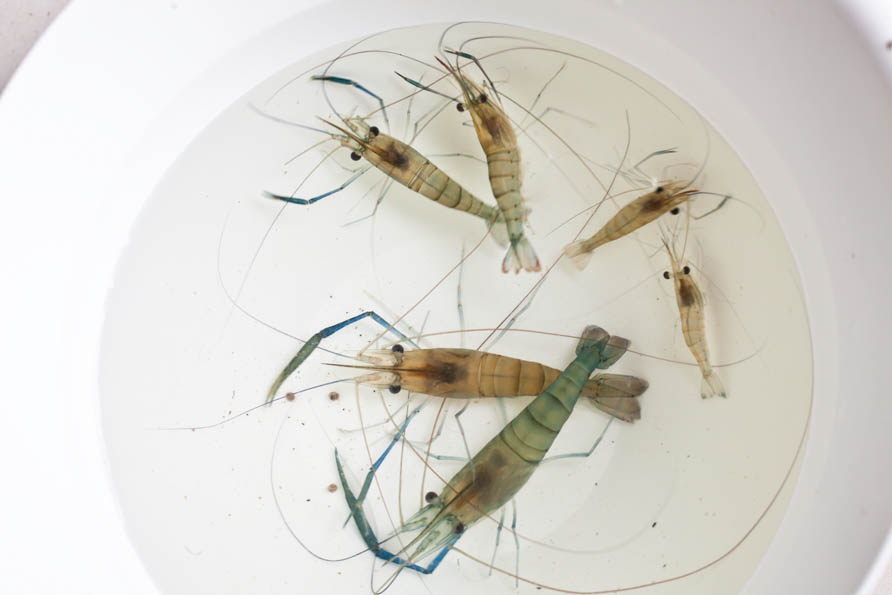
What a difference in size, this is common, especially in a tank environment.
The presence of larger blue-clawed males suppresses the growth of the other males in the tank.
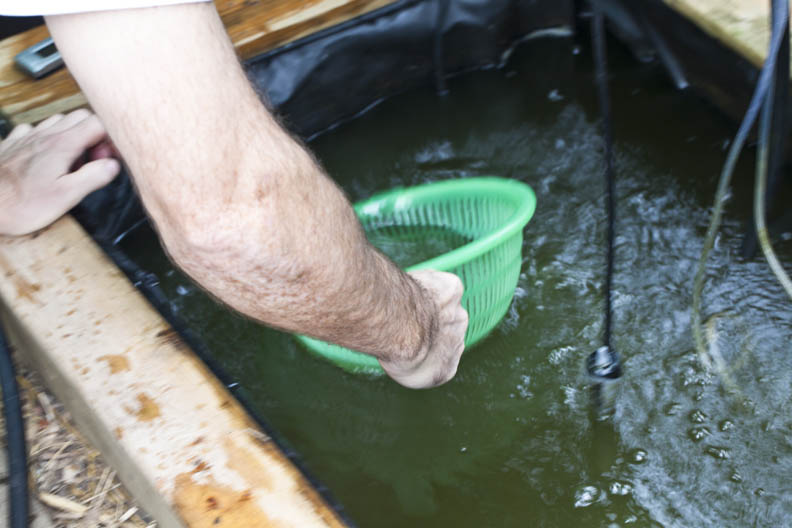
Hubby scooping out the prawns to be moved into the house for winter.
The majority are kept in a large aquarium in the basement which we got for next to nothing on Craigslist. The four biggest, toughest boys are in the smaller tank upstairs in our dining room. By removing the larger prawns, it gives the smaller males a chance to grow faster. They are fascinating, I could sit for hours watching them posture for better tank position, groom and feed themselves, and molt. Aquariums have always intimated me because it seems so complicated with filters and constant water testing, but it was necessary for these guys to continue their grow out through winter.
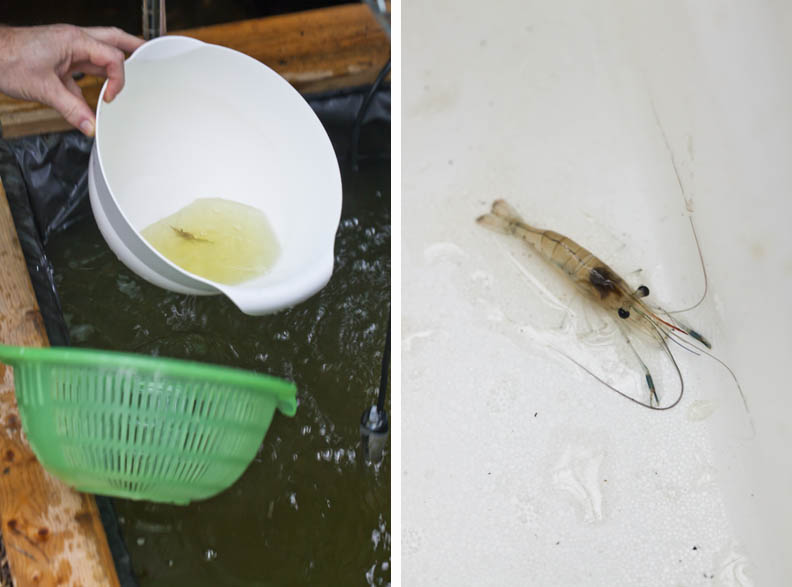
Everything seemed fine for the first few days, then they started dying. Everyday, another handful of prawns were scooped out of the large tank. The water turned from clear to murky white. After some Googling, it was apparent that we were suffering from New Tank Syndrome, where both tanks became the breeding ground of a bacterial bloom. We made the mistake of not “cycling” the tank before we added livestock.
White murkey water indicates the presence of bacteria in the water.
These prawns were dying from ammonia and nitrite levels rapidly rising in the water due to the organic waste from their poop and feed. The cycling period would have allowed beneficial bacteria to build up and take care of this, breaking down toxic ammonia and nitrites, and turning it into nitrates. Which is exactly what the aquaponics system was doing in the greenhouse. Clay pebbles (loaded with beneficial bacteria) from the greehouse aquaponics bed were added to both aquariums. Hopefully they will multiply in time to balance things out before we lose the entire crop.
Plastic bird netting was added to increase their surface living area and provide a safe place to molt.
Amazing how they can snap at the neck and wriggle out of their shell.
New molts are pale and translucent, vulnerable until the new shell hardens in a couple of days.
The biggest one-clawed male got his second claw back after his molt. Imagine losing an arm and then growing it back.
Crop, weird to refer to these little prawns as crop. After watching them go through molts, and protecting them from cannabilizing each other, I’m not sure if I will be able to “chill kill” and eat them when the time comes. If all goes well, we will be able to breed them in February.
Rowena - Another really great and interesting blog Jill.
Even though the white murky water is a killer… it does make for such beautiful images!
Good luck when it comes to ‘the kill’, I must admit I would have problems with that part too!
Jill - The dying has stopped, I hope they are stabilized. Will keep you posted!
France Simard - the first image is so beautiful, that I’m seeing a new pattern design for dinnerware.
Jhodi - to ariane may and others who agree – not only is henry cuter than most dogs, he is definitely cuter than most humans!!!
The Last Prawn » FreestyleFarm - […] my last Prawn Update back in November, you are probably wondering how the remaining prawns are doing. Out of the […]
Spring Happenings » FreestyleFarm - […] year, the water in the tanks had to be heated to keep the prawns alive, this year, Hubby is working on a cooling system to keep the rainbow trout cool and […]
Chris Beck - Hello Jill,
We have a indoor aquaponics veg, talapia, pacu & worms recirculation system that has been running for 2 1/2 years and is very well established. We have learned lots during this time and would like to add a few tanks of malaysian freshwater prawns to our system. We have enjoyed your interesting blog very much and was wondering if you know where we may obtain some juveniles due to it is hard to find a supplier that will ship to British Columbia, Canada.
Thanks
Dolores & Chris
Kamal Ibrahim - Dear Sir
I am interested to buy prawn, crayfish, other types of fish like tilapia, trout, carp, etc. for indoor farming
Can you advise where to find supplier to buy, I am living in Oakville, Ontario, Canada
Kindly advise
Kind regards
Kamal Ibrahim
001 416 8799600
Kamal Ibrahim - Dear Sir
I read on the website that you sale prawns
Can you tell me what is the minimum amount for shipment and the price, term and if any conditions I am living in Oakville, Ontario, Canada
Kind regards
Kamal Ibrahim
001 416 8799600